Following is a scene from a movie, a welcome of sorts to a group of retirees as they arrive at their new retirement residence:
“Gentle friends, you have found your way to this place, bequeathed to me by my beloved father, that I have raised from the ruins of his broken dreams, and renamed The Best Exotic Marigold Hotel for the Elderly and Beautiful.
Yes, I use the words most deliberately….
You have all heard the chimes at midnight, and long in tooth have you become. Who knows how many days you have left? But we are most honored that you have chosen to spend that time with us.”
The Best Exotic Marigold Hotel
—Sonny Kapoor, The Best Exotic Marigold Hotel, screenplay by Ol Parker, p. 30.
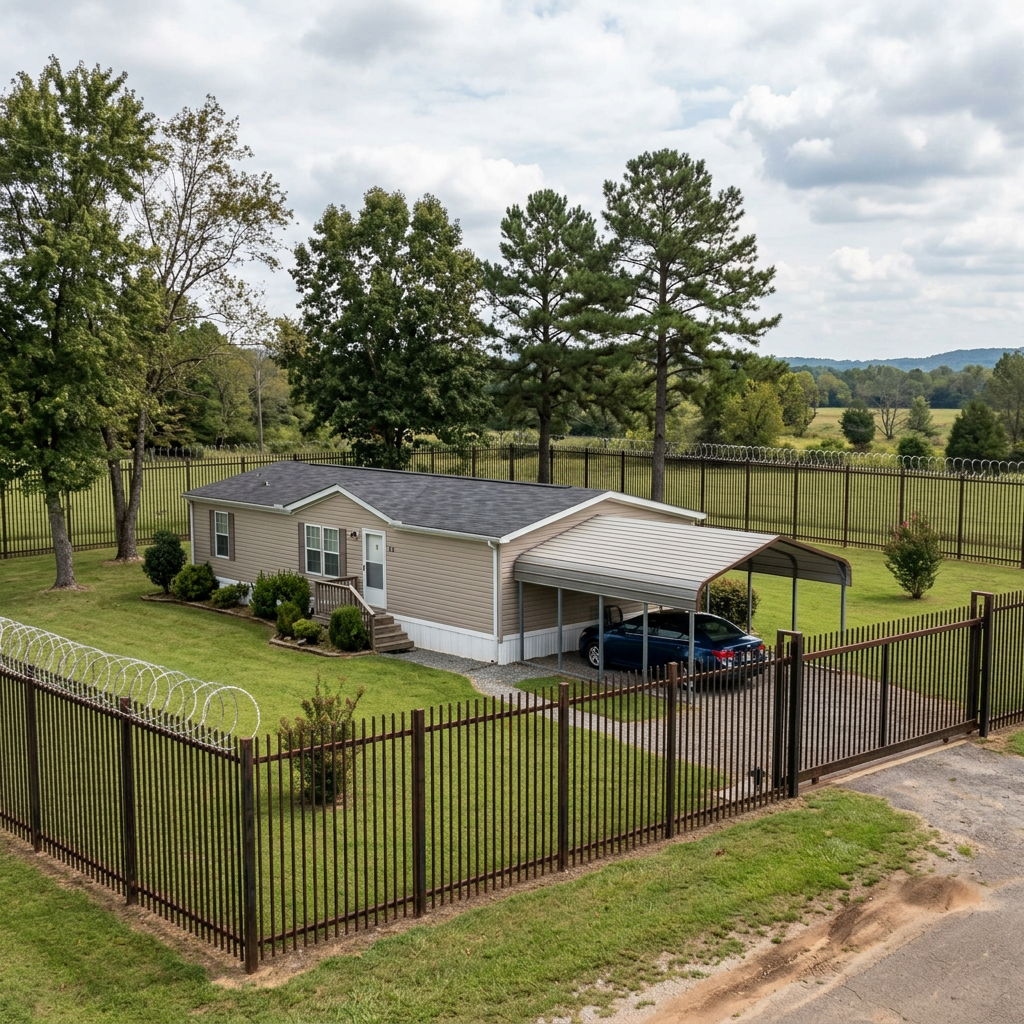
Well, it wasn’t quite that formal back in 2018 when we moved into our manufactured home in the Aberdeen community of Ormond Beach, Florida.
Still, those same sentiments, although unspoken, rang in my ears as,
“We are so happy that you’ve come to enrich our lives by dying among us.”
Beginning Our Golden Years
For me, moving to a seniors-only (55+) community upon retirement meant only one thing: you are resigning yourself to the likelihood that this is your final stop before the next train carries you to the end of the line.
Senior living communities such as Aberdeen of Ormond Beach, FL, can best be described as the duplicitous merger of:
A landowner—most often a corporation that legally owns the land, sometimes privately owned.
AND:
A land manager—an entity that will oversee, maintain, control, and collect the rent due from you for the piece of dirt on which your home resides.
To simplify things, I will henceforth refer to the said community as a trailer park, because, despite any candy-coated name you give it, that’s what it is.
A trailer park is a place where you combine the mortgage payment and the land rental payment into one large monthly sum; ergo, paying a monthly fee to live in the home you own.
What it boils down to: too poor to purchase your own piece of dirt, you instead help someone else pay for theirs!
It is quite a conundrum.
But there’s more!
Here, in our little 55+ community, in addition to the normal upkeep and maintenance expenses, homeowners insurance, etc., we also pay the corporate “pass-through tax.”
That tax is our portion of the property tax liability that the corporate owner passes on to us so their profits are not reduced by it.
Ergo, they reap the benefits, and we pay the taxes for their doing so.
And on top of all of that, you are also responsible for the upkeep of your property in the same fashion you would if YOU OWNED the land.
Oh, but here in Aberdeen, there is a maintenance group that regularly murders… sorry, I mean… mows the lawn.
The worst part, however, is the captivity!
Once you have resigned yourself to this style of living, don’t expect to leave with any home equity in your pocket. Much like the Eagles, “Hotel California,” you can check out any time you like, but you can never leave.
Why Don’t We Just Move Out?
As with a vehicle, the home begins to depreciate the day you move in; you have to purchase new tags for it annually, and if it’s a double-wide, you purchase two; if it’s a triple-wide, three! Perhaps that’s why they are referred to as mobile homes.
Zoom – zoom!
** Let’s say you finance $150,000 for the home and a bit of remodeling.
You have a 15-year mortgage payment of roughly $1,400 a month, along with lot rent that may range from $1,100 to $2,100 a month, depending upon the community.
Then, well, you start thinking of moving elsewhere!
So, you begin to look at the listings in your community and, surprisingly, you find houses that have been on the market for a year or more, unoccupied, STILL PAYING RENT, and nobody is interested!
Yes, like yours, they have been remodeled and upgraded. But who wants to spend between $13,200 and $25,200 every year merely to rent the ground beneath a home they already own?
And that rental charge increases by 5% – 7% annually.
**You also need to be aware that If the home is lost through natural disaster or accident, it must be replaced with an equivalent or better home. You cannot just walk away.
(A perspective formed from both personal and observed experience.)
The Worst Part is Living Among the Tombstones

On my daily morning walk, I pass multiple vacated homes along my street, several whose owners, with whom I was acquainted, have died and left the home in the care of their respective families.
Dozens of the properties, several on our street alone, have been vacant for more than a year, with their asking prices lowered time and again in hopes of attracting a buyer.
Sadly, although not lived in, the heirs must continue to pay not only rent, but also utilities so that the home does not rot in the Florida heat and humidity.
If the home is abandoned, there is a chance the property will be seized by the landowner and sold at a price of their choosing, as permitted by Florida law.
Regardless of the situation, for me, most of those empty homes represent the dead, as if we live amid the memorials of a cemetery.
There is also the thought of living in the “last house I’ll ever own.” A thought that often gives me the sensation of a death row inmate rather than that person who, by all the hype about retirement, is supposed to be “enjoying his golden years.”
Like a flock of vultures overshadowing it all is that CORPORATE GREED. Retirement communities, retirement homes, medical facilities, doctors, pharmaceuticals, from every angle, exploiting the elderly by constantly finding new ways to entrap those retirement dollars we all assumed would be ours to enjoy.





Your thoughts are always appreciated—please feel free to leave a comment.